be a company
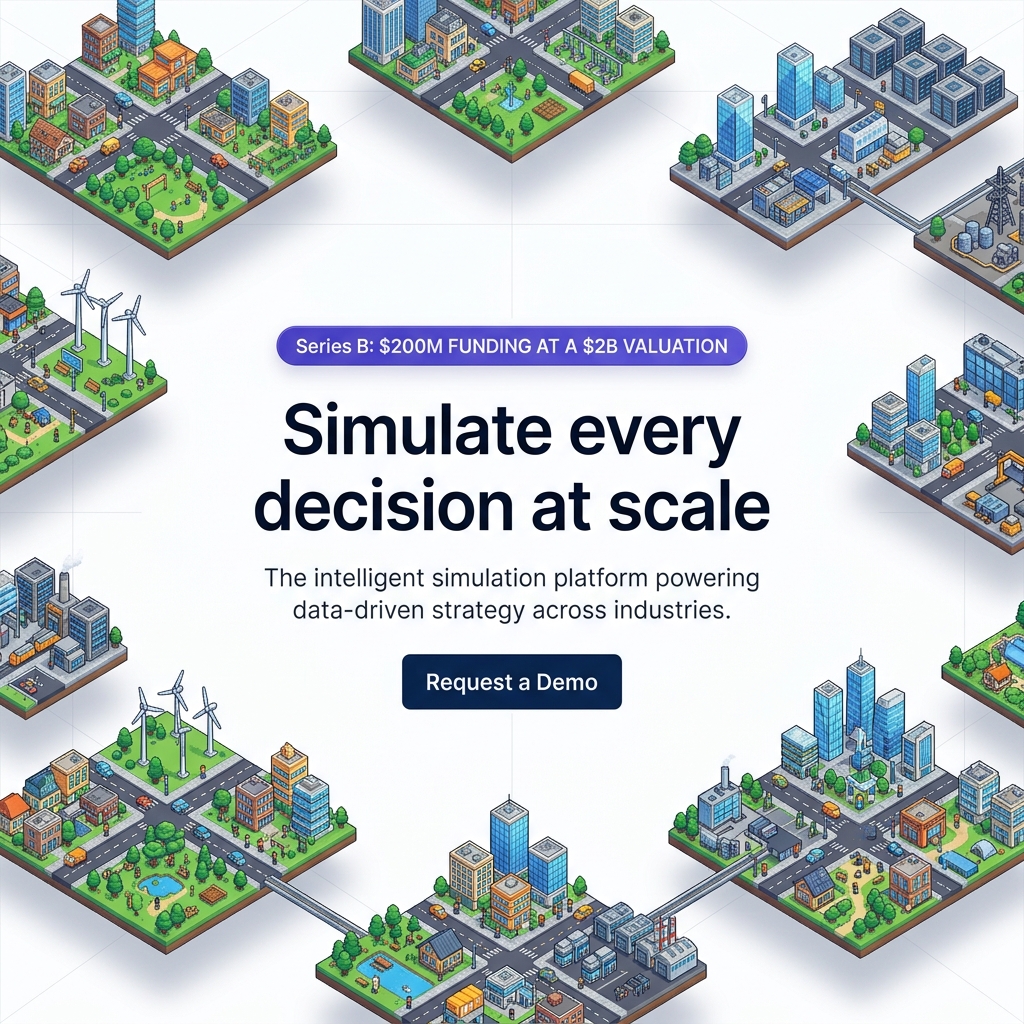
A startup called Simile AI just raised over $200 million in Series B funding, propelling its valuation to a staggering $2 Billion. Their stated mission? To create "agentic twins" and build behavioral foundation models that simulate all 8 billion people on Earth.
The vision is undeniably cool: Fortune 500 companies like CVS, Wealthfront, and Deloitte can instantly test new products, pricing strategies, or marketing campaigns on thousands of AI-generated "synthetic humans" before spending a single dollar in the real world. No focus group recruitment, no gift cards, no waiting weeks for survey responses.
It sounds like science fiction made real. But as engineers and builders, we have to step back and ask the uncomfortable question: Can an AI model truly simulate human behavior across diverse ethnicities and cultures, or are we just building a $2B echo chamber for internet averages?
1. The W.E.I.R.D. Data Trap: Who Is the AI Actually Mimicking?
In behavioral psychology, researchers have long warned against the W.E.I.R.D. bias—studies conducted overwhelmingly on subjects who are Western, Educated, Industrialized, Rich, and Democratic. Over 80% of psychological research subjects represent less than 12% of the global population.
Now look at large language models. What are they trained on? Western digital text: English Wikipedia, Reddit, digitized US news archives, Silicon Valley tech blogs, and academic papers written in English.
When an AI attempts to simulate a 45-year-old shopkeeper in Lagos, a rice farmer in Tamil Nadu, or an architect in Kyoto, it isn't channeling their lived experience. It is performing a linguistic statistical approximation based on what Western internet users wrote about them. Prompting a model with [Persona: Middle-class mother in São Paulo] often yields a caricature of stereotypes rather than genuine cultural nuance.
Tokenized representation is not human consciousness. If your AI model is trained on Western text, its synthetic 'global persona' is just a Western engineer wearing a virtual hat.
2. The Street-Level Paradox: Even Neighbors Don't Agree
The fundamental flaw with macro-behavioral simulation is that human beings are delightfully, frustratingly chaotic. You don't need to cross oceans to see deep behavioral divergence—even people living on the exact same street think and act completely differently.
Consider house #14 and house #16 on any suburban street:
- House #14: Subscribes to 4 financial newsletters, buys organic oat milk, strictly compares APR rates, and votes based on tax policy.
- House #16: Buys whatever product has the shiny red sticker, holds deep multi-generational superstitions, makes major financial decisions based on advice from an uncle, and refuses to use mobile banking because of a random rumor they heard in 2019.
They share the same climate, the same local council, the same postal code, and the same local grocery store. Yet their decision-making logic lives in completely different universes. How does a mathematical model account for micro-histories, family trauma, hyper-local superstitions, and sheer human moodiness?
3. Regression to the Mean: The Death of Outlier Breakthroughs
By design, LLMs perform loss minimization. They predict the most statistically probable next token. This means synthetic human simulations naturally suffer from regression to the mean—they produce the average, polite, sanitized response of a hypothetical human consensus.
But real market breakthroughs, iconic viral campaigns, and transformative products never come from consensus averages. They come from the weird, irrational, emotional edge cases of real human nature.
4. Synthetic Focus Groups vs. Real Human Friction
Don't get us wrong—Simile AI's tech (rooted in Stanford's groundbreaking Smallville generative agents research paper by Joon Sung Park) is a remarkable engineering achievement. For rapid prototyping, testing UI text clarity, or spotting obvious usability flaws, synthetic agents are incredibly useful tools.
But substituting AI simulations for genuine human conversation is dangerous. If founders and enterprise teams rely solely on synthetic humans to validate their ideas, they risk launching products tailored for a math equation instead of the real, messy world.
The Bottom Line
Simile's $2 Billion milestone proves that the appetite for AI-driven human simulation is massive. But as builders, we should remember: data can predict trends, but humans create them. Nothing replaces getting out of the building, talking to real people on real streets, and listening to the beautiful, unpredictable noise of actual human lives.